
Why This Lemon Curd Works for Macarons – Non-Soggy Recipe.
If you’ve been searching for the perfect lemon curd macaron filling, I think you’ll love this one. After many batches, tweaks, and taste tests, I’ve developed a lemon curd that’s bright, tangy, and smooth enough to pipe beautifully into delicate macaron shells. It holds its shape, doesn’t weep through the shells, and tastes like sunshine in every bite—plus, it’s specifically designed to work with macarons.
If you are thinking of replacing the lemons in this recipe with limes, you can use my Lime Curd Recipe.
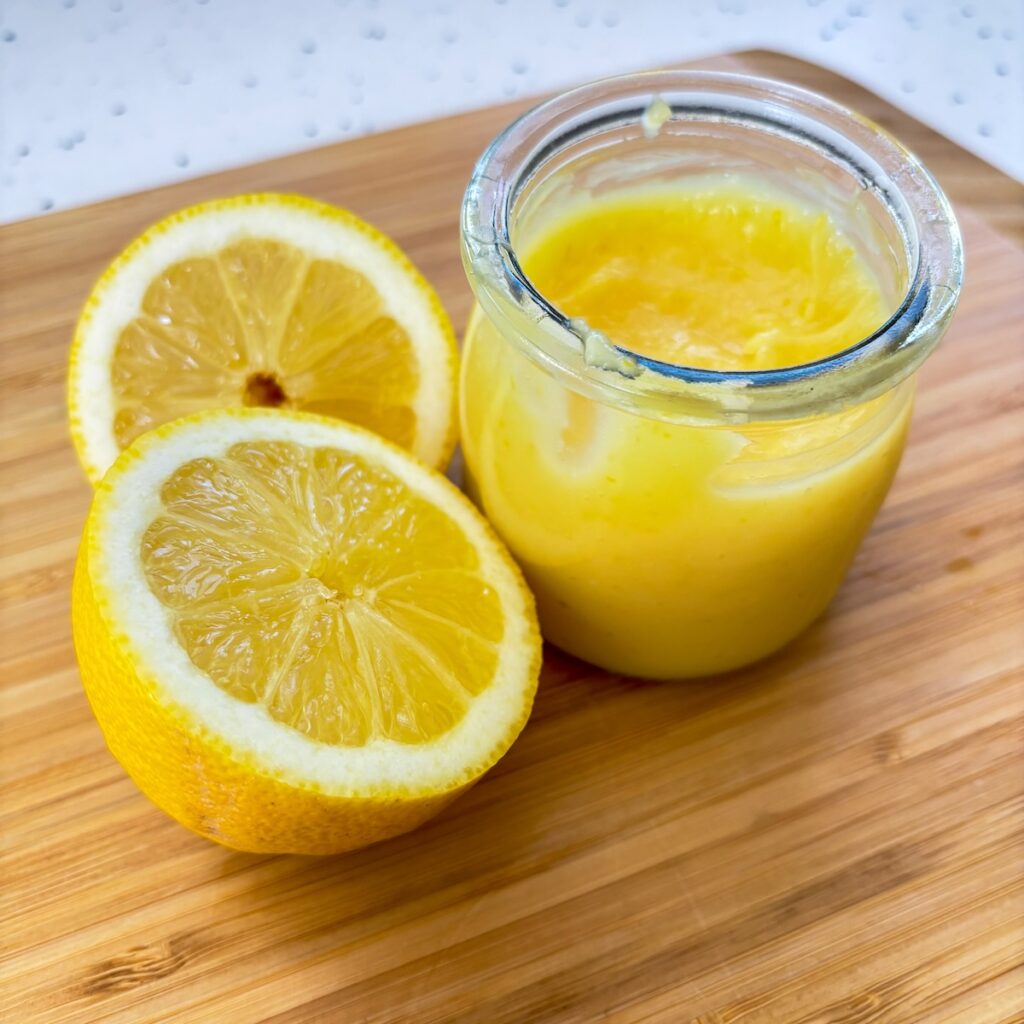
- Lemon Curd Using Only Egg Yolks: Perfect for Macaron Leftovers
- How to Make a Thick, Non-Soggy Lemon Curd that Works for Macarons
- How to fill macarons with Ganache (or buttercream) and curd to minimise sogginess.
- How to Make Lemon Curd More Zingy For Macarons: Blender Tip
- Ways to Use Up Leftover Lemon Curd
- How to Store Lemon Curd
Lemon Curd Using Only Egg Yolks: Perfect for Macaron Leftovers
I hate the thought of egg yolks going to waste, and this lemon curd is the perfect way to use up some of the egg yolks left over from making macaron shells. It is possible to make lemon curd with whole eggs, but I specifically wanted to come up with a lemon curd macaron filling recipe that uses just the yolks. Using only yolks helps in this non-soggy macaron filling recipe because egg whites introduce more moisture.
How to Make a Thick, Non-Soggy Lemon Curd that Works for Macarons
I have found that if you keep heating the curd mixture up until it reaches 76-79 degrees C (170-175 F), it will become thick and hold its shape once set. The process of heating and stirring regularly reduces the moisture content and thickens up the curd without the need to add in a thickening agent such as corn flour.
Be careful not to overheat the lemon curd mixture because you may not be able to pipe out the curd if it gets too thick and it can also start to change from smooth to grainy texture if it gets too hot. The curd will thicken up even more as it cools.
It’s important to use only the 70g lemon juice that this recipe calls for and not any more because extra lemon juice will increase the moisture content.
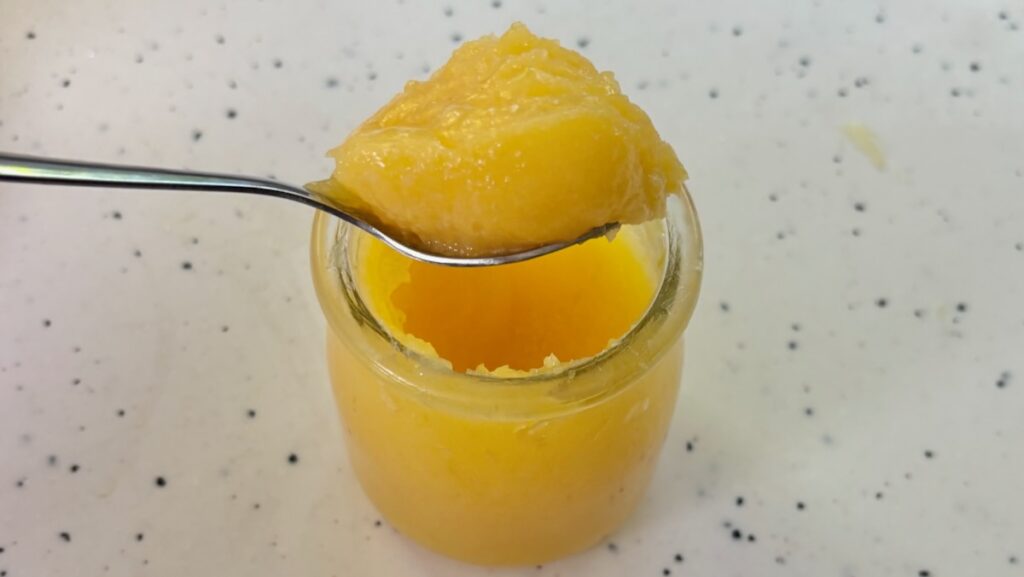
Recipe Note: Lemon curd thickens as it cools. The lemon curd pictured below was heated to 76 degrees Celsius and thickened up to a spoonable consistency.
I would still recommend pairing this non-soggy lemon curd macaron filling with a buttercream or ganache as they act as a barrier and stop any leftover moisture from seeping into the shells and making them mature too quickly and become soggy. I have included an image showing the method I use for filling macarons with lemon curd and a ganache filling below. If your lemon curd turns out thinner than mine, you can still use it as mentioned but your macarons will probably mature quite quickly.
How to fill macarons with Ganache (or buttercream) and curd to minimise sogginess.
First pipe the ganache onto a macaron shell using a large round piping tip. Then fill a separate piping bag with a small round piping tip, with the lemon curd, and inject the curd into the centre of the ganache. Squeeze the piping bag until the curd becomes visible at the top of the ganache and you will have the right amount. For the larger lemon macarons shown below I used two injections of lemon curd, for smaller round macarons you will probably only need one.
Quantity Note: Using this method, along with the ganache/buttercream, you will need 3-5g lemon curd filling per macaron and this lemon curd recipe yields approximately 200g

Tip for really lemony lemon macarons: I whipped some lemon curd into white chocolate ganache for this lemon macaron recipe and it turned out to be delicious. You could also mix lemon curd into buttercream.

How to Make Lemon Curd More Zingy For Macarons: Blender Tip
Did you know that if you blend lemon zest and sugar, lemon oils are released from the zest into the sugar resulting in a more flavourful lemon curd. It also helps to add a pinch of salt because salt intensifies the lemon flavour.
Using a blender means that the pieces of lemon zest become very small and it also makes the sugar granules finer and they dissolve quicker.
If you don’t have a blender, it’s ok to skip this step. And if you prefer to have a totally smooth Lemon Curd with no bits of zest at all, you could pass the finished Lemon Curd through a fine sieve at the end.
Ways to Use Up Leftover Lemon Curd
There are so many ways to use up left over Lemon Curd and I have listed some below to provide inspiration:
- Lemon Meringue Pie
- Lemon Yoghurt Parfaits
- Lemon fool
- Lemon curd cheesecake
- Lemon and blueberry muffins
- Lemon and yoghurt ice lollies
How to Store Lemon Curd
Store in a sealed container or jar in the refrigerator for up to two weeks. Lemon curd also freezes very well in ziplock bags or freezable airtight containers. Once frozen, use within a month.
Yes, and I have had success doing so. I found it worked best with 3 limes rather than 2 because the limes I used were quite a bit smaller than lemons. I also added a drop of green food colour to make the lime colour more vibrant but this isn’t necessary.
Lumps can form if the mixture starts to set against the sides of the bowl while you are heating it. To stop that from happening stir the curd regularly and scrape down the sides of the bowl with a rubber spatula during heating.
It is not the same, Lemon Pie filling recipes usually include a thickening agent such as cornflour (cornstarch) where Lemon Curd does not. Having said that I do think this Lemon Curd would make a delicious pie filling.
Thin lemon curd could be caused by using too much lemon juice. The recipe step says to weigh out 70g of lemon juice rather than using all of the juice because different lemons contain different amounts of juice. Also be sure to heat the lemon curd mixture up to 76-79 degrees C and allow it to cool completely. It will thicken up as it cools. If it is still too thin you can still use it but your macarons will probably mature quite quickly.