
A Troubleshooting Guide for Oily Macarons
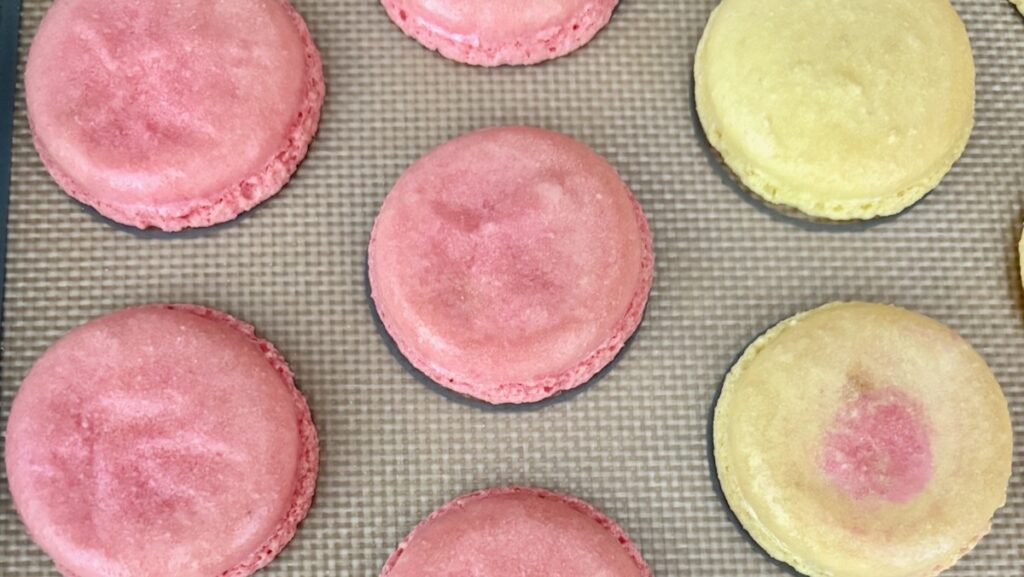
Struggling with oily, wrinkly, wet looking macaron shells? I’ve been there… recently… for longer than I care to admit and let me tell you, it’s one of the most frustrating problems you can run into in the macaron world.
What makes oily shells particularly annoying? Unlike some macaron mishaps where you can save the batch, adjust your piping, or still make them work, oily macarons are pretty much done for especially if you sell your macarons.
You don’t really know when a batch will turn out oily. You can’t fix them mid-bake. You can’t salvage them after cooling. They’re just… greasy little shells that refuse to cooperate. It’s discouraging and a total waste of time and money!
But here’s the good news: oily macarons are almost always preventable, and they’re definitely a sign something specific is happening that can be fixed. Once I figured out why mine kept coming out greasy, I went from producing one failed batch after another to consistently getting smooth, perfect shells every single time and I want to help you do the same.
In this guide, I’m walking you through everything I learned during that frustrating phase about how to identify and fix oily macarons – the root causes, the quick fixes, and most importantly, how to prevent oily macarons from happening in the first place. Whether you’re dealing with slightly greasy shells or a completely compromised batch, let’s get you back on track.
- A Troubleshooting Guide for Oily Macarons
- Why Do Macarons Get Oily? Causes Explained
- Oily Almond Flour – The Most Common Cause of Oily Macarons
- How to check for oily almond flour?
- Can oily almond flour be saved so you can make macarons with it?
- Almond Flour Temperature & Storage: Control Oiliness
- Other reasons why Almond Flour Releases Oils: Review your Macaron Baking Process
- Best Ingredients for Non-Oily Macarons: Quality Matters
- Slightly Oily vs. Heavily Oily Macarons: Solutions by Severity
- How to Prevent Oily Macarons: Complete Checklist
- Downloadable Oily Macaron Troubleshooting Checklist
- Oily Macaron FAQ: Expert Answers to Your Questions
What are oily macarons and what do they look like?
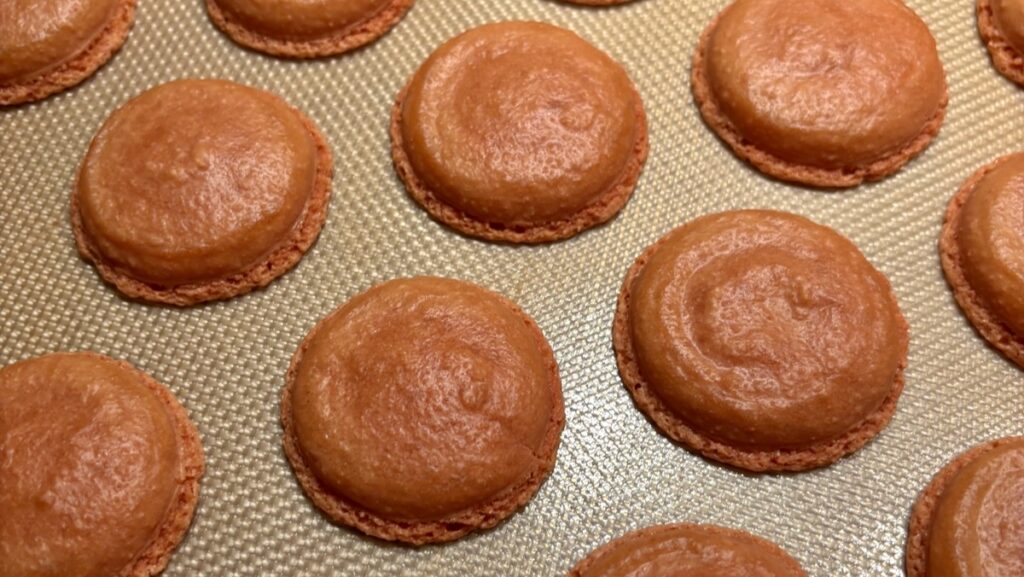
How can you be sure if you are dealing with oily macarons? The images below are photos that have taken of some of my oily batches.
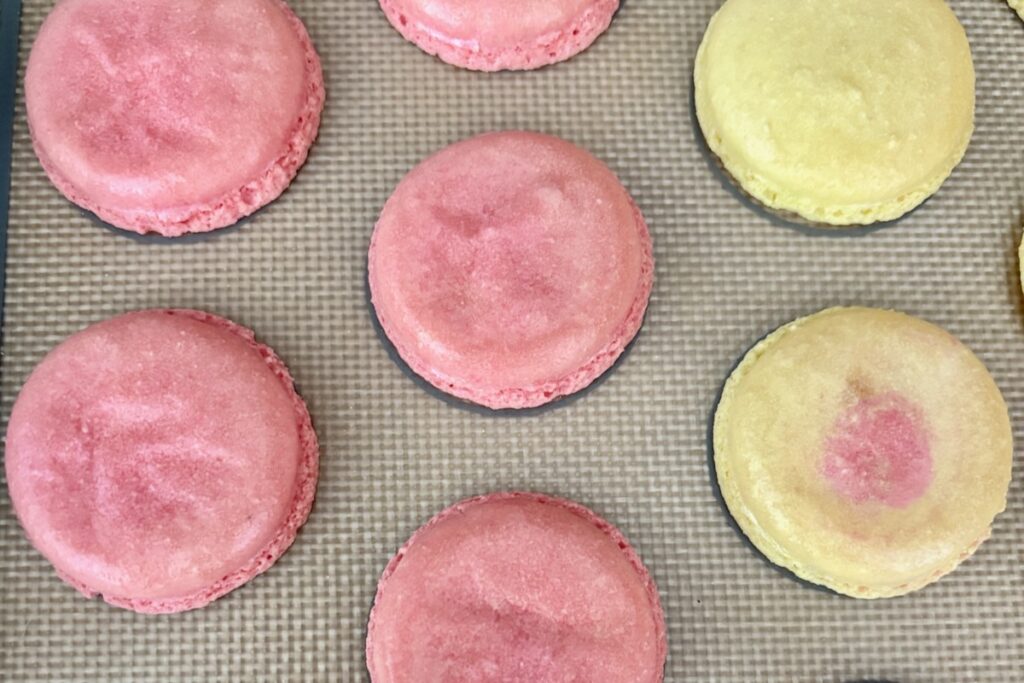
Oily macarons lack structure. They sometimes look ok straight out of the oven but when you go to tap the tops to test whether they are done you will often find them to be soft and your finger will go straight through the macaron.
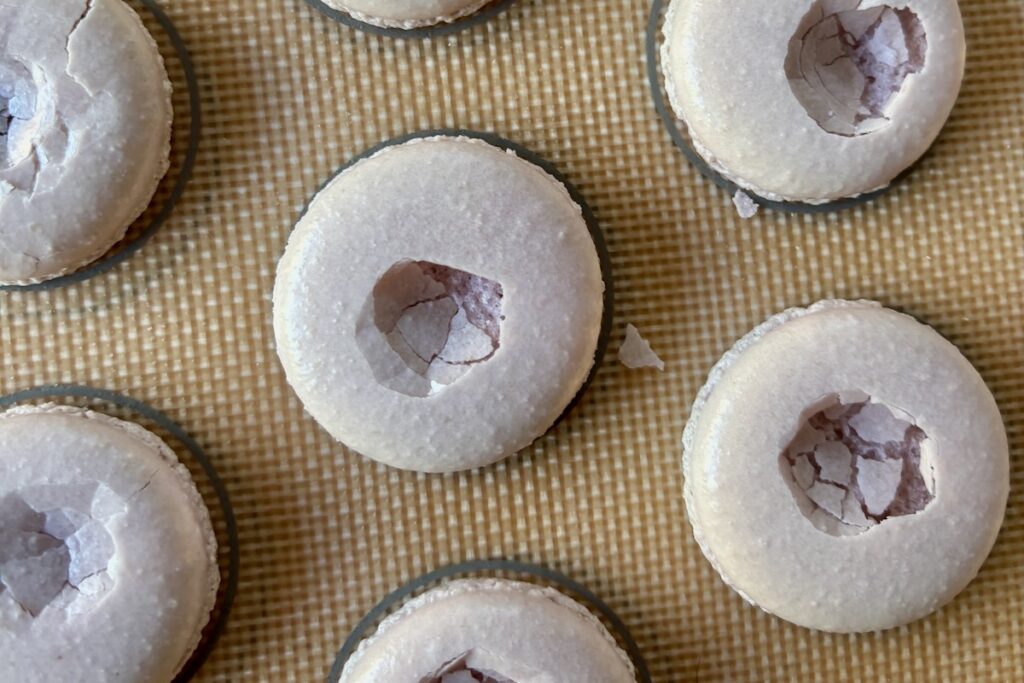
They can also sink after a few minutes out of the oven and the macaron shells turn become wrinkly and look wet
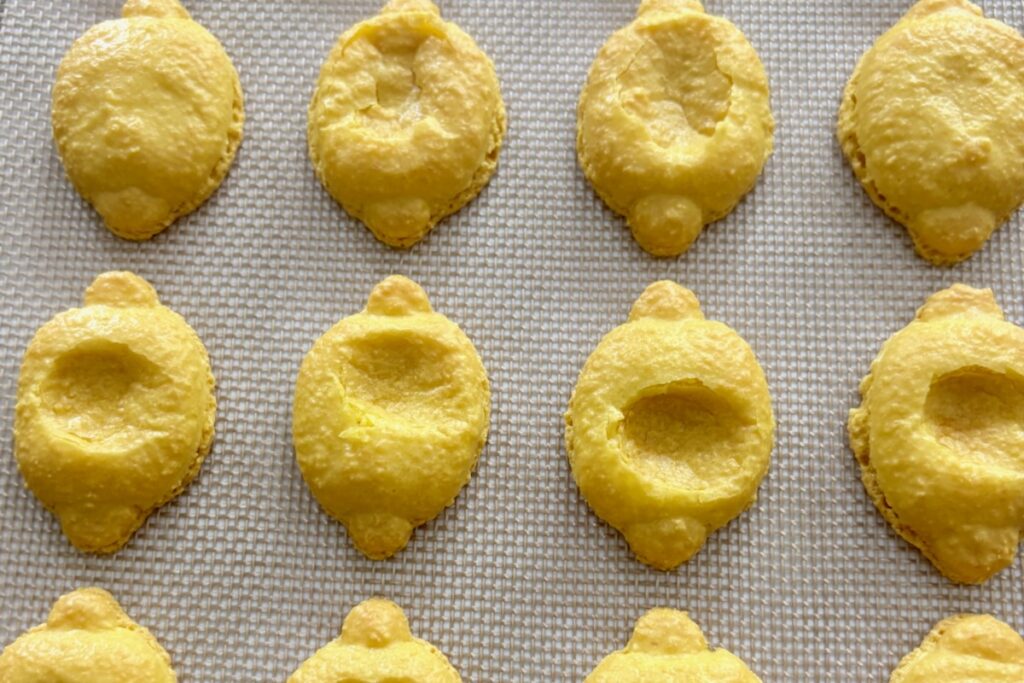
Sometimes the macaron shells will just have blotches of oil – these ones might be salvageable with some clever decoration.
Why Do Macarons Get Oily? Causes Explained
Oily Almond Flour – The Most Common Cause of Oily Macarons
The cause I always suspect first is oily almond flour. Almond flour naturally contains oils and releases these oils during processing and over time. This oil can alter the structure of macarons.
If you have been making macarons successfully using the exact same recipe and method in the same environment then oily almond flour might just be the culprit.
If you are new to making macarons, are still experimenting with recipes and technique and your almond flour seems to be fine, check out the other suggestions in this post.
How to check for oily almond flour?
Get out your almond flour and pour some into a bowl or container. The tell tale sign in clumps of almond flour that have stuck together. Oily Almond Flour is like slightly damp sand and it might be a more yellowy colour than usual. This is a photo of some oily almond flour that I had – this shows the clumps that had formed in the almond flour – at the edges of the bowl:

You can test whether the almond flour sticks together by pressing a small amount between your finger tips. If the almond flour contains a healthy amount of oil it will feel like dry sand and it will fall back into the container in individual grains. If it has released excess oil it will stick together slightly.
Tell tale sign: When I have baked with almond flour that is too oily I have noticed that the batter gets thicker the more I mix it during the macronage stage and it takes a really long time to reach the flowing ribbon consistency – if it even gets there at all.
Can oily almond flour be saved so you can make macarons with it?
Possibly… I have had some success with drying out almond flour in the oven. I prefer to use new flour over drying it out because new flour ensures the best macarons.
Important Note: If the almond flour smells or tastes off or chemically at all it may have started to go rancid and it should be thrown away.
How to dry out almond flour in the oven:
- Pre heat oven to 70 degrees C fan (90 degrees C no fan or 195 degrees F)
- Line a large baking tray with parchment/baking paper (to make it easier to put back into the bowl later)
- Pour in the almond flour and make sure its in an even layer
- Bake in the oven and remove every 5 minutes to stir and test – almond flour can easily brown – especially near the edges of the tray – so it’s really vital that you keep an eye on it! The last batch I dried out was dryer within 15 minutes.
- Leave to cool completely on the tray.
- Once cool transfer to an airtight container or ziplock bag and store it in the fridge until ready to use.
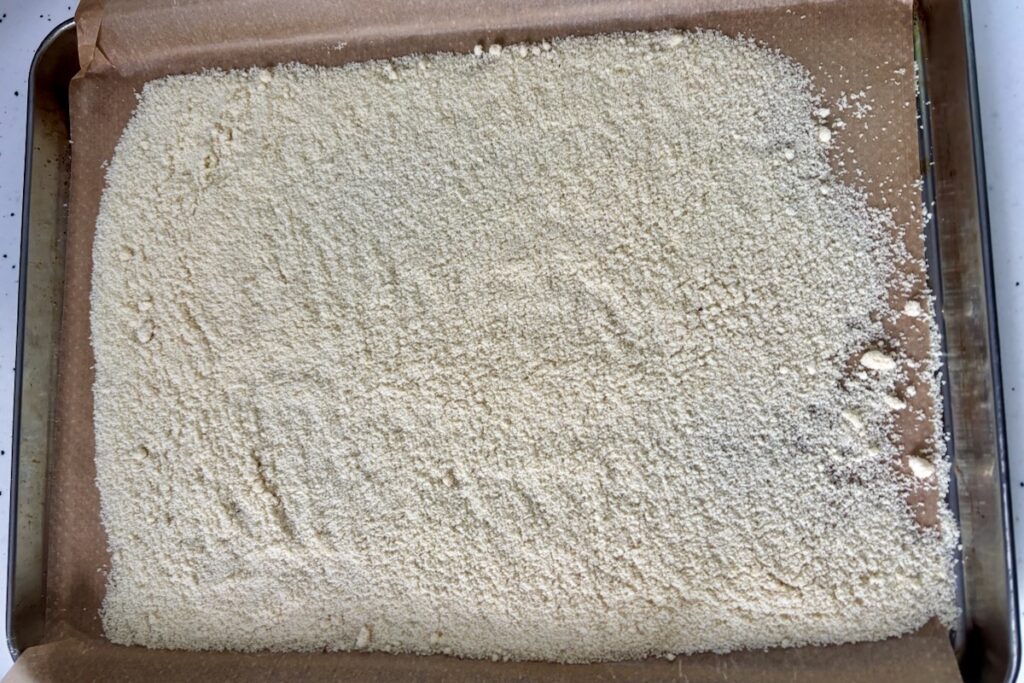
Admittedly this is extra effort – and as mentioned above I prefer to move on to a new bag of almond flour to ensure the best results.
Almond Flour Temperature & Storage: Control Oiliness
Prevention is always better than cure, so I recommend storing almond flour in a sealed container (the bag it comes in is fine as long as it is air tight) in the refrigerator. Short term it will be ok in a cool dry cupboard but long term it will do better in the fridge.
I’ve heard it is also possible to freeze almond flour but I have not tried doing that so I can’t advocate for that. Let me know if this is something you do – you can use the comment box below.
Other reasons why Almond Flour Releases Oils: Review your Macaron Baking Process
Excess oil can be released from almond flour if certain conditions are met during the process off making the batter. I have listed below what I have noticed:
- Meringue too warm – If you use either the Swiss or Italian meringue method which starts with heating the granulated sugar and egg whites and the whipped egg whites have not cooled enough the warm mixture could cause the almond flour to release oil during macronage (combining the meringue with almond flour and icing sugar). Cooling your meringue to room temperature or when it no longer feels warm at all works best – around 20-25 degrees C (68-77 degrees F)
- Meringue too stiff – If the meringue is too stiff it will take more mixing. Sometimes it feels like you will never get to the flowing consistency of batter when this is the case! I have two tips for this. Number one your meringue needs to be whipped to a stiff peak so it has enough structure but if you over whip it it can ‘break’ and make it very difficult to combine with the dry ingredients. How does this cause oiliness? The more you mix the more oil is released.
- Oven temperature too low – If the temperature of your oven is too low for baking macarons, oil can be released during cooking and your macarons may turn out underbaked. Oiliness usually won’t be the only sign if oven temperature is the problem. Your macarons will likely take longer than usual to cook, may be stuck to the baking surface. Use an oven thermometer like this one to keep an eye on the internal oven temperature during baking. The solution if low oven temperature is the cause of oily macarons is to increase your oven temperature by 5 degrees C (40 degrees F) next time you bake.
Best Ingredients for Non-Oily Macarons: Quality Matters
Quality of ingredients does matter below are some hints as to what you can look out for:
- Almond flour – Not all almond flours are the same quality. Look for a blanched finely milled flour. In the UK almond flour is often labelled as ground almonds.
- Sugars – Choice of sugar should not have impact on oiliness.
- Egg Whites – If there are any traces of yolk in your egg whites your meringue won’t whip up properly but this should not cause oily macaron shells.
- Cocoa powder – If you use the wrong cocoa powder or too much you can introduce fat and oiliness to the batter. I have done this before and my macarons had blotches of oil on the top. They were not pretty!! Look for a cocoa powder that has 10-12g fat per 100G (10-12%) like this one My recipe for chocolate macarons has a safe quantity if cocoa powder if you are looking for a guide.
Slightly Oily vs. Heavily Oily Macarons: Solutions by Severity
If your macarons are only slightly oily but still have solid tops and smooth complete bottoms you could ice (frost) them or dip them in chocolate to be able to use them.
If the tops are actually soft and wrinkled there isn’t really anything that you can do apart from start again.
How to Prevent Oily Macarons: Complete Checklist
In the troubleshooting phase dealing with oily macarons? Run through this checklist:
- Check your almond flour – If it has signs of oiliness try oven drying or start a new bag
- Review your macaron process to ensure you are not incorporating heat or over working the batter
- If you are making chocolate macarons check the fat content of the cocoa powder and look for 10-12% fat and don’t add too much.
- Keep an eye on internal oven temperature during baking using an oven thermometer
If you find or know of any other causes that you think I should add to this checklist please let me know. My hope is for this to be a really helpful and comprehensive guide for anyone who is struggling with oily macaron shells.
Downloadable Oily Macaron Troubleshooting Checklist
Oily Macaron FAQ: Expert Answers to Your Questions
Wrinkly macarons are almost always caused by excess oil in the macaron batter. The excess oil can be introduced through ingredients such as almond flour which has released excess oil or cocoa powder with too high fat content. Oily macarons can also be a result of introducing heat to almond flour or over working almond flour during macronage. Low baking temperature could also cause macarons to appear oily or wet. This post covers all of those causes in detail and provides tips and solutions.
It is really important not to use gone off almond flour. If your almond flour smells chemically like paint or varnish or if it tastes bitter or unusual it may have gone off and shouldn’t be used. Almond flour that is past its best and has started to release oil may appear more yellow than usual and may have big clumps or lumps of flour. If it still smells and tastes ok you could try the oven drying method mentioned in this post.
Short term almond flour can be stored in an airtight container or sealed packet in a cool dry cupboard. Longer term or once opened store almond flour in an airtight container in the fridge until the best before date on the package or until it shows the signs of releasing oil mentioned in this post.
Leave a Comment